New SEC Limit Up/Down Proposal Would
Not Have Prevented the Flash Crash
New research shows it likely would have prevented its quick
recovery.
|

Back to
Main Research Page
We have read the SEC Limit
Up/Limit Down Plan to Address Extraordinary Market Volatility (LULD, or
the plan). We have also read through the
comments submitted
to the SEC by knowledgeable professionals in the industry, and we agree with
nearly all of the concerns presented. There are a few worrisome problems that
are not presently addressed in the commentary nor the plan itself.
These troubling concerns were not immediately apparent; they only presented
themselves after we undertook the effort to simulate what would have happened
on May 6th, 2010 if the plan was in effect. That was the day of the
flash crash, which is the whole reason this plan is being proposed.
We'll briefly mention the most troubling concerns we found, so that we can keep
this paper short.
No software developer with any sense was part
of this process.
The first thing we discovered when coding the LULD rules, is that no software
developer with any sense was part of this process. This we are sure of. Let us
explain. There is a need to have reliable prices for calculating trading bands,
because triggering false trading halts could be far worse than not having a
limit at all. The plan tries to achieve stable prices by averaging all
trades over the last 5 minutes. This method is extremely processor and memory
intensive, because for each symbol, the software needs to buffer anywhere from
1 to 100,000 or more trades. Worse, stocks that hardly trade will have just a
few trades (or none) in the last 5 minutes: so the very stocks that need a
price stabilization method will get no benefit from this approach! The best way
to ensure stable prices with minimal processor and memory overhead is to use an
exponential
moving average.
The second glaring problem is one of
robustness, or rather a lack of robustness. Readers should know that trades
and quotes are processed by
separate
systems, which are often out of sync by hundreds of milliseconds during
normal trading, and many times that amount during active (not crazy) trading.
However, the plan assumes, at its very core, that these two very
different systems will magically always be in sync. And this is a plan
designed to alleviate problems during times of severe market stress! Many
incompetent software engineers have been fired on the spot for less. The
solution here, is to pick one of the two systems (hint: use quotes) and avoid
any dependencies.
The third, and perhaps most important problem, is that the plan
persists an ambiguity of the definition of the
NBBO in Reg NMS
and how the NBBO is (not) used to route orders to protected quotations. The
ambiguity arises because the language of Reg NMS assumes that information is
transmitted instantly: at the time when Reg NMS was written, the speed of light
was so fast it was, practically speaking, instant. This, coupled with intense
competition to be the fastest at all costs, led to exchanges using their own
internal calculation of the best bid or offer as a substitute for the real NBBO
for order routing and trade through protection.
We think it would be prudent for the SEC to
clearly document how an investor's order is routed through the system at each
step in the process, in detail, with particular attention paid to the step when
the NBBO is taken into account.
So it would seem to us that exchanges either have to abandon and rewrite the
order routing layer to adopt the plan as it is written (not very
likely), or they intend to apply the definition of the NBBO to mean the one
that each exchange calculates internally and
ignore the NBBO
as defined in Reg NMS. In light of this continued ambiguity, we think it would
be prudent for the SEC to clearly document how an investor's order is routed
through the system at each step in the process, in detail, with particular
attention paid to the step when the NBBO is taken into account.
Finally, the delays in quote and trade dissemination from the SIPs are common
and significant enough that it will lead to new forms of latency arbitrage when
stocks approach their limit bands. Latency arbitrage always favors the trader
with the fastest speed, to the detriment of everyone else.
The SEC has proposed many band-aid fixes since May 6, 2010 in an effort to make
investors feel confident again about the equity market. The sad truth though is
that none of their proposals so far will prevent another flash crash. Worse,
some proposals, such as this one, will likely make things even worse.
The Simulation
Since it is impossible to simulate what would have happened
after a trading band is hit, we decided to stop the
calculations for a stock once it hits a band. We show the time and price where
a stock hits a band, and where the prices actually traded, since there was no
pause on that day. It is up to you, the reader, to imagine the impact from
halting trading in the stock at the price and time indicated.
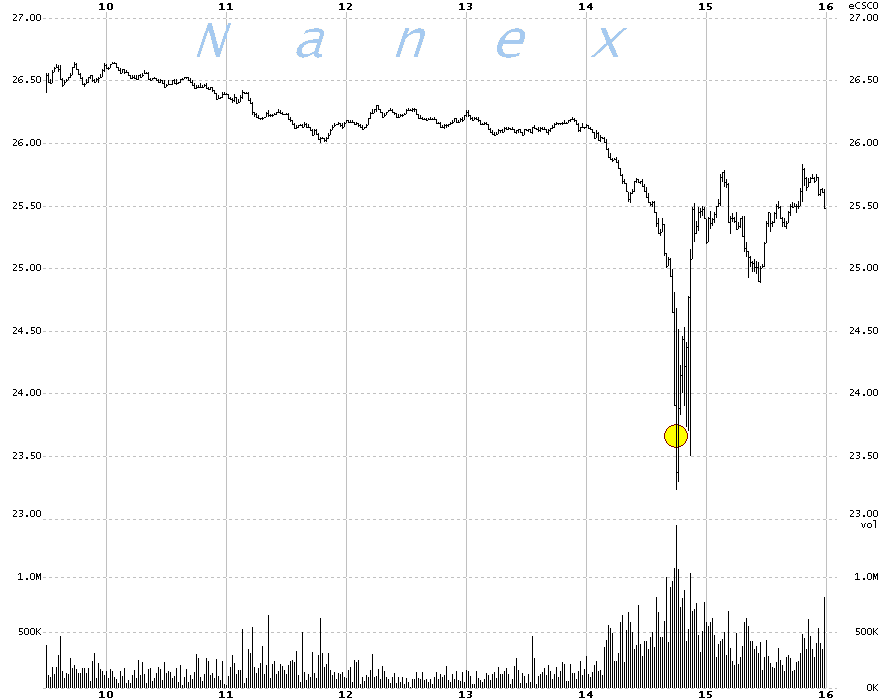
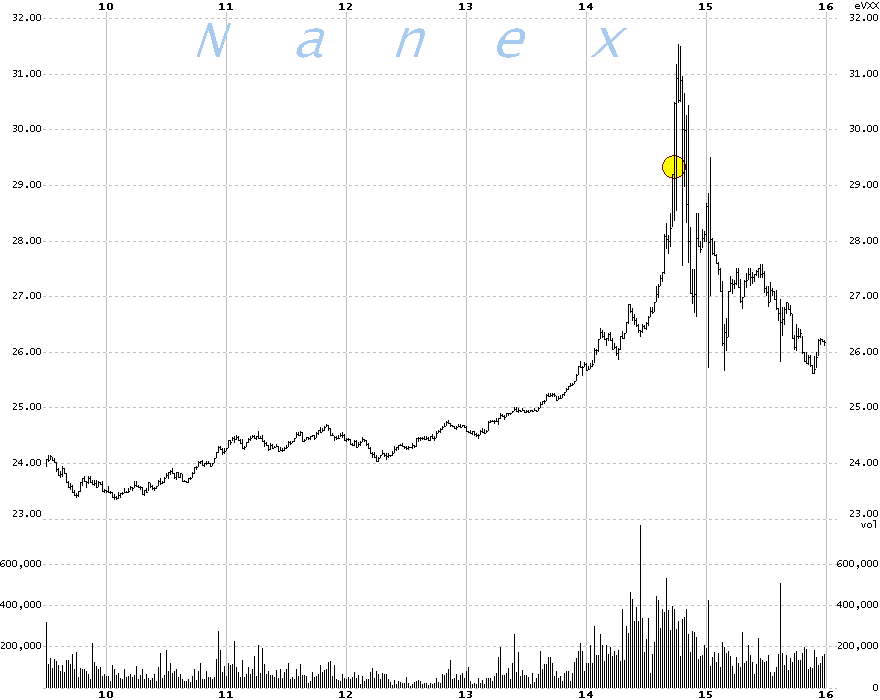
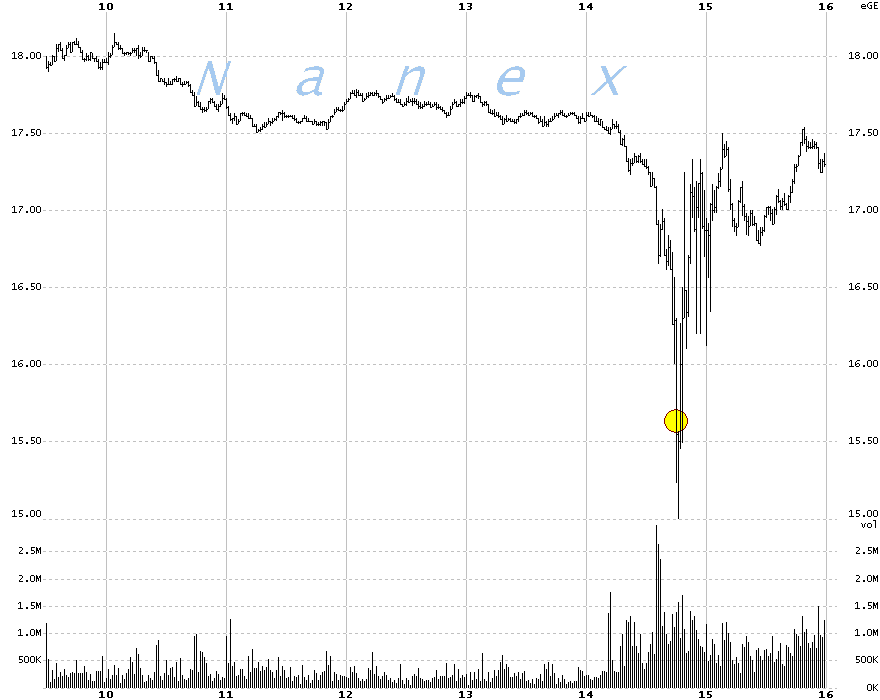
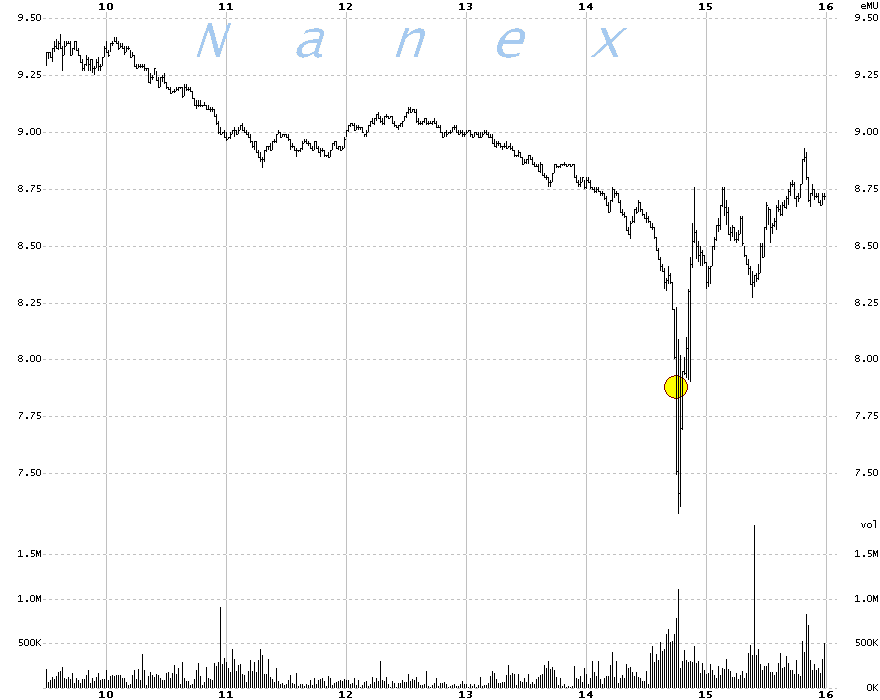
On the day of the flash crash, 350 symbols would have hit the price bands as
defined by the plan. Of these, only 3 symbols hit their price bands
before trade and quote systems became overloaded and severely stressed. 304
symbols hit bands after the emini began its 5 second halt.
One saving grace of the flash crash was that
it happened so fast, a lot of people didn't have time to react.
It is very troubling to see so many large capitalization, widely-held stocks
triggering a pause or halt near their very lows. We wonder how this would have
impacted index calculations, futures prices, options, ETFs and other equivalent
assets. We wonder how much these halts would have prolonged the event. One
saving grace of the flash crash was that it happened so fast, a lot of people
didn't have time to react. Many people weren't even aware of the crash, or its
severity, until after it was over.
|
SPY Prices showing when the Limit Up/Down price bands hit. A red dot
indicates when a stock hit its band.

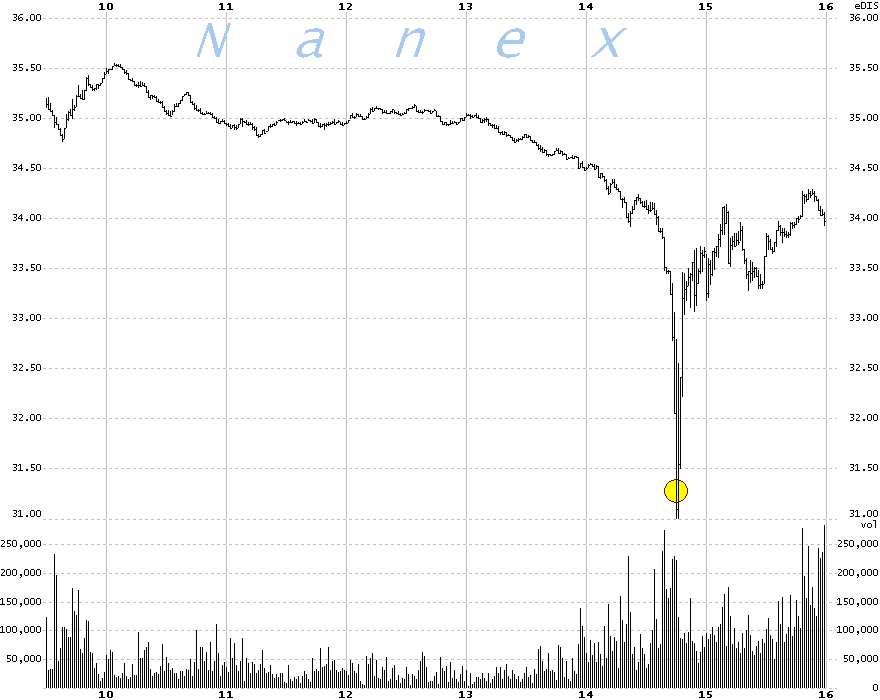
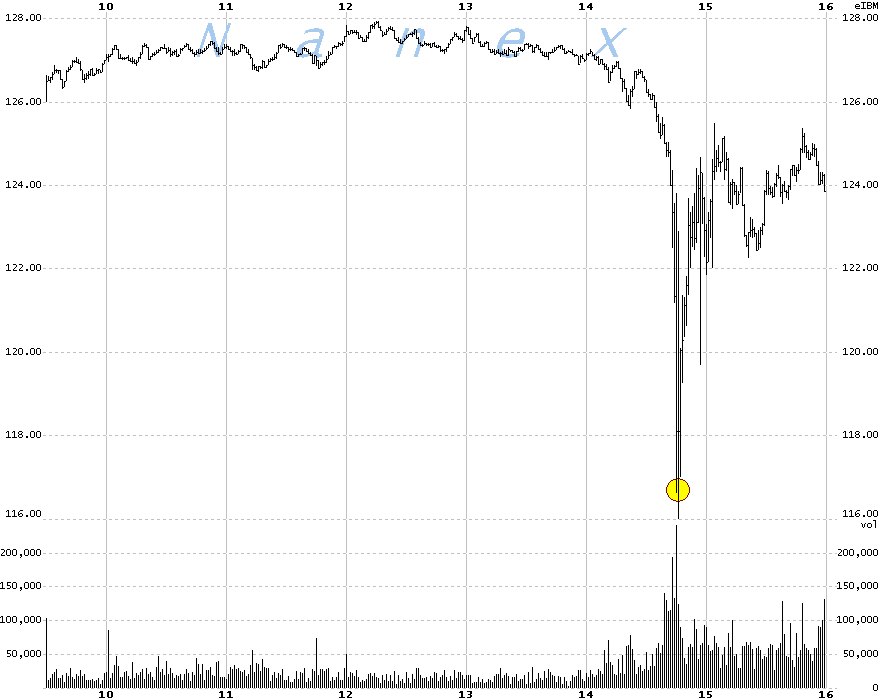
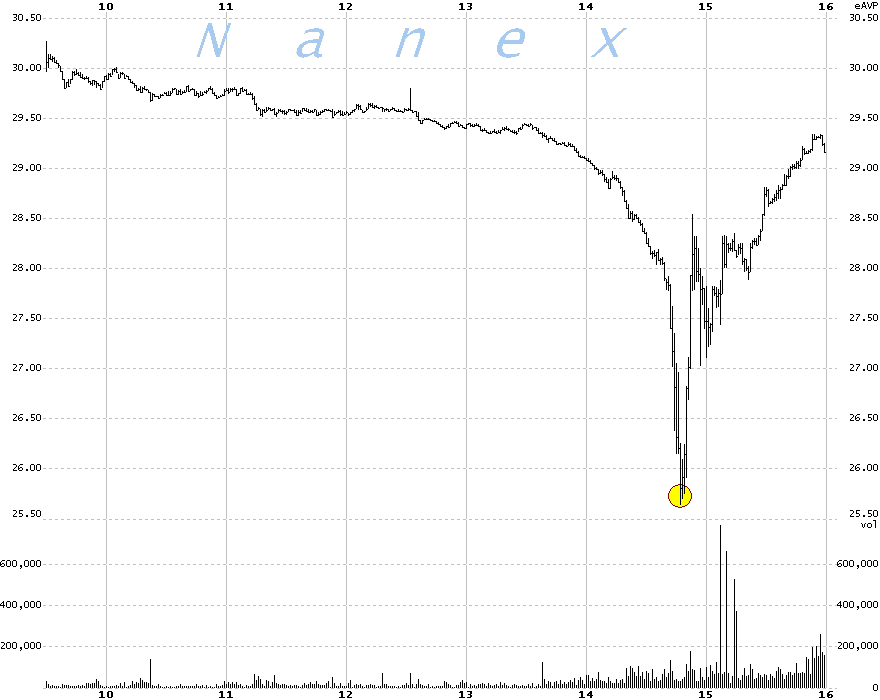
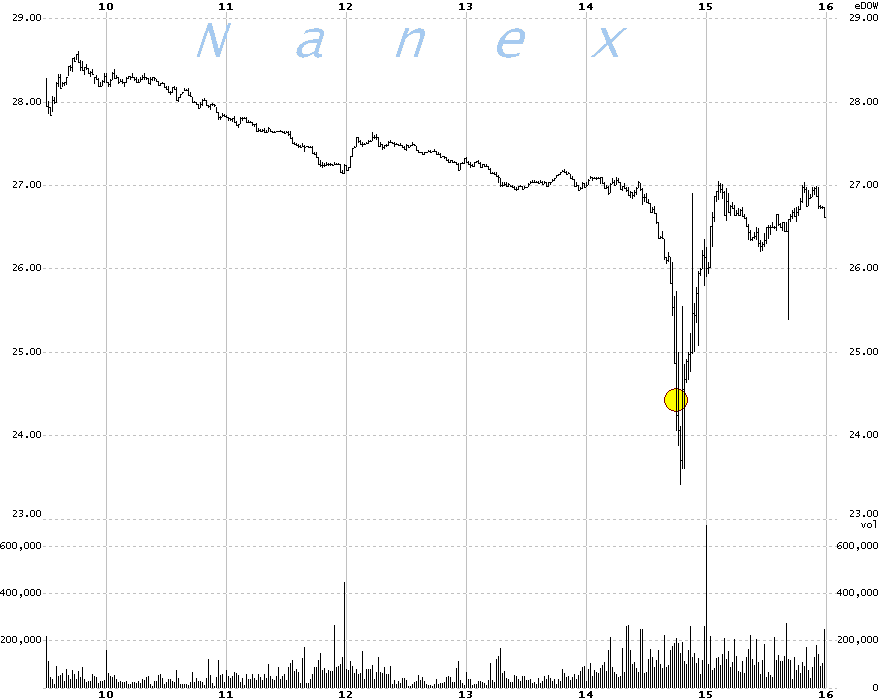
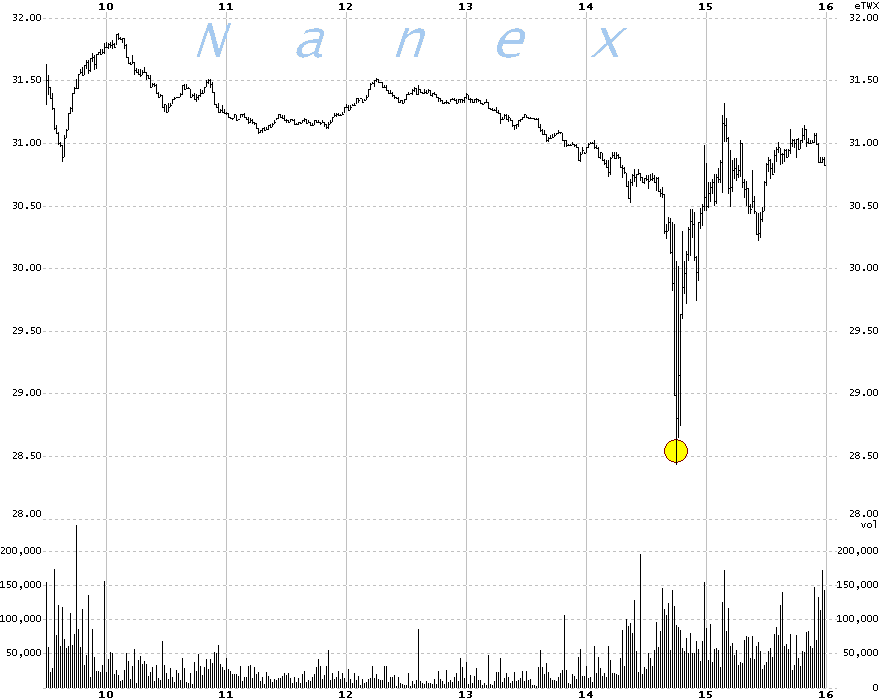
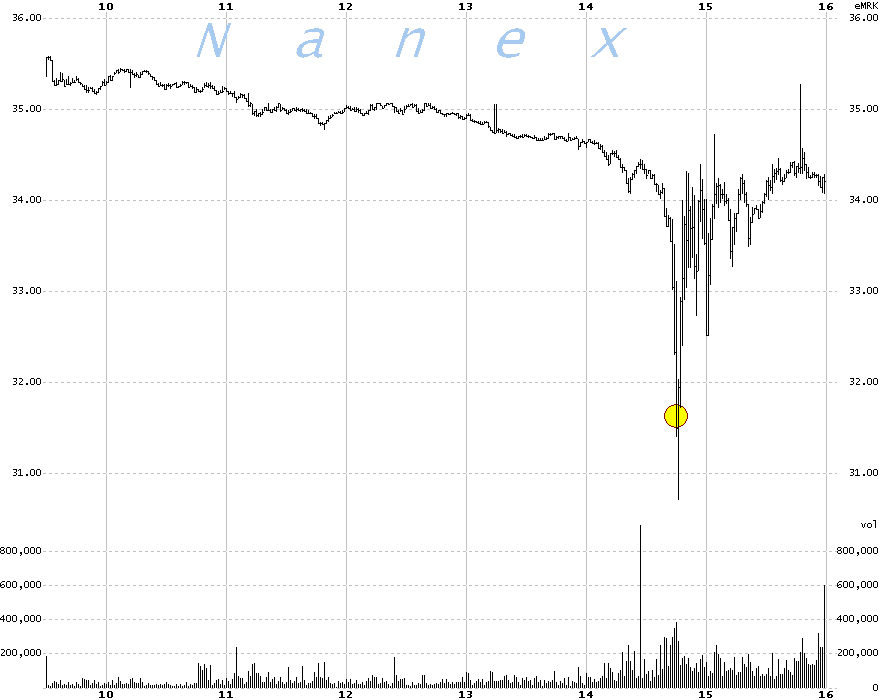
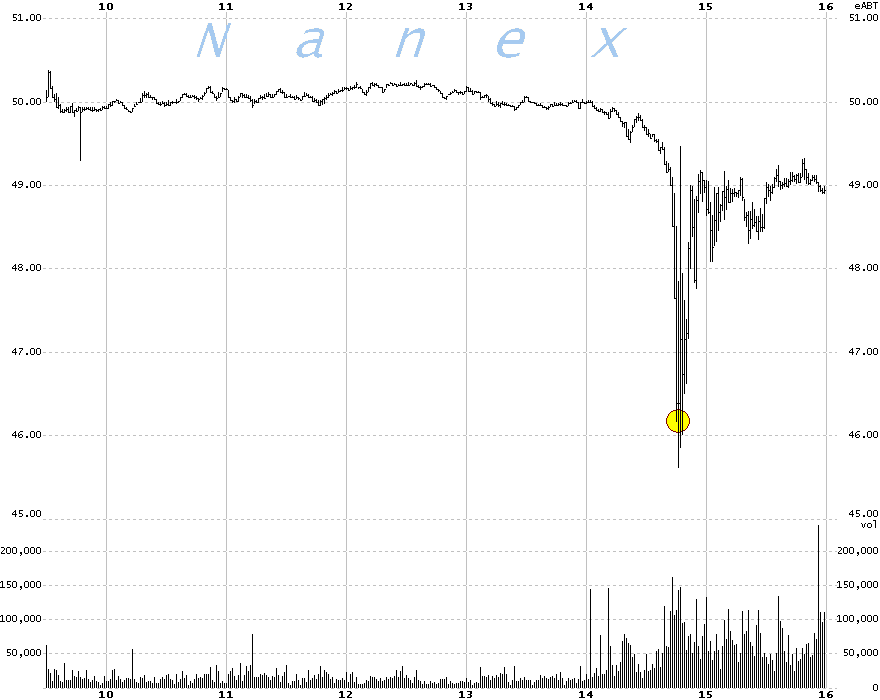
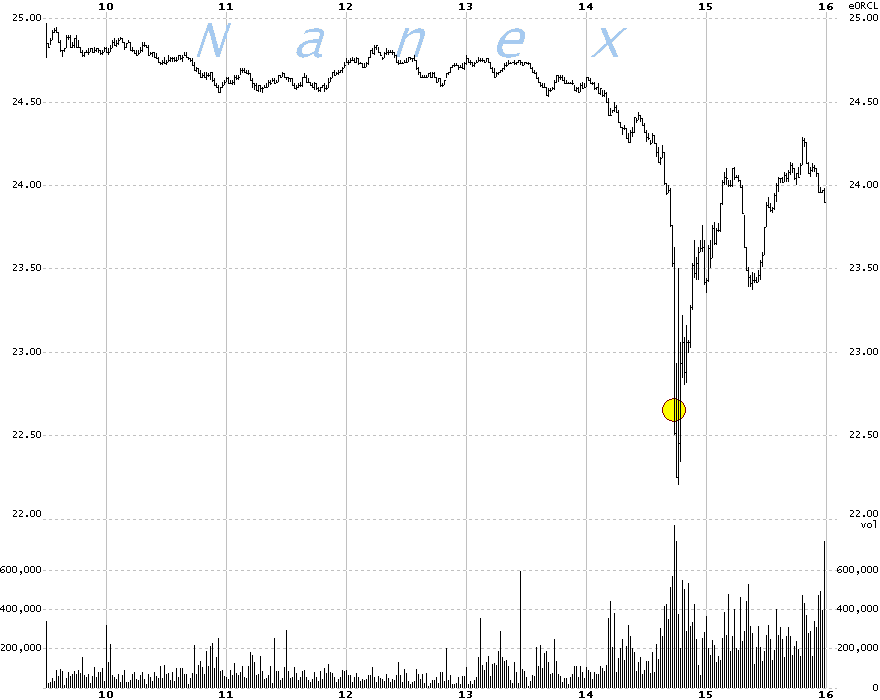
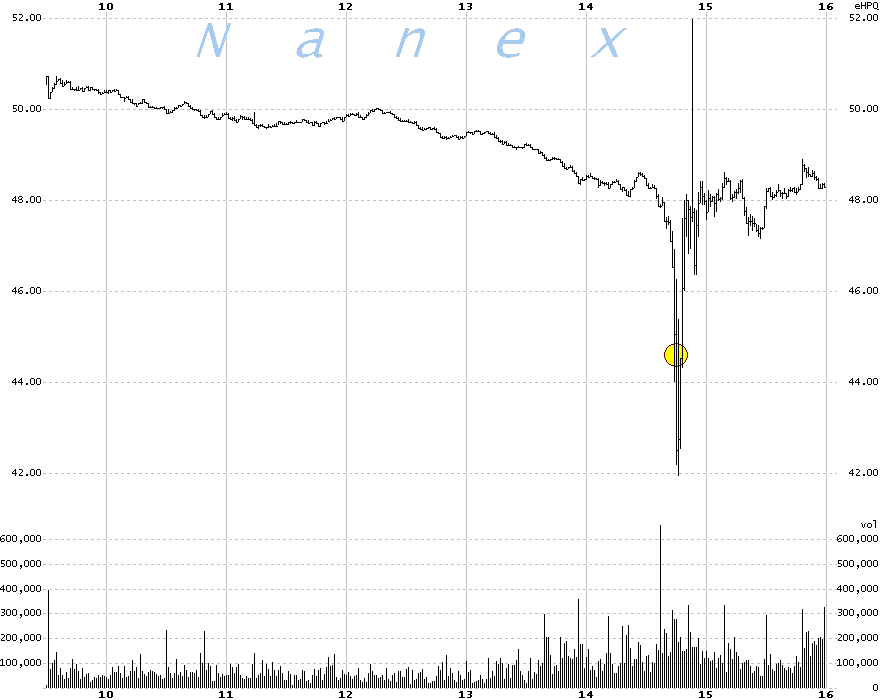
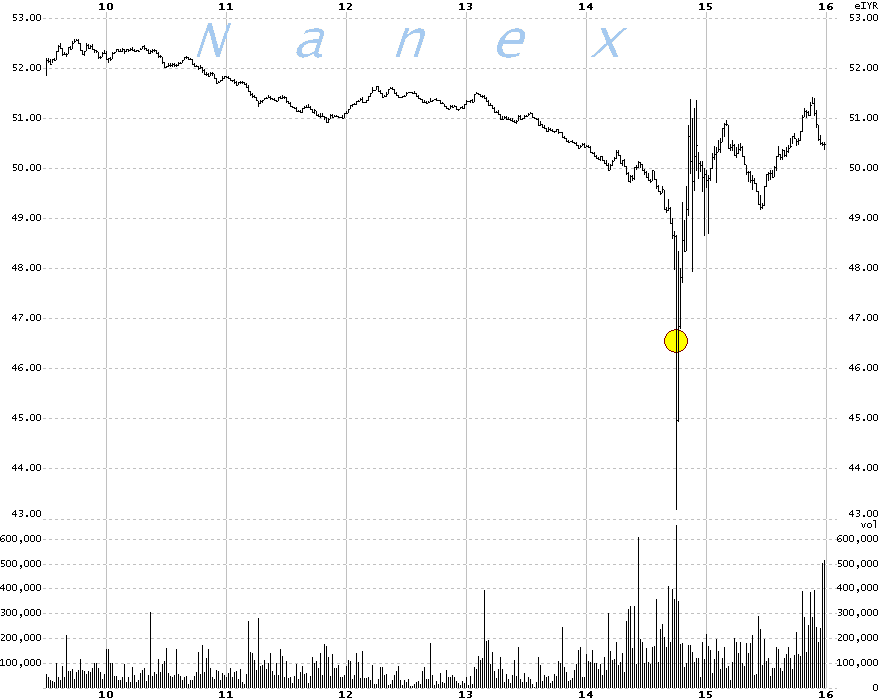
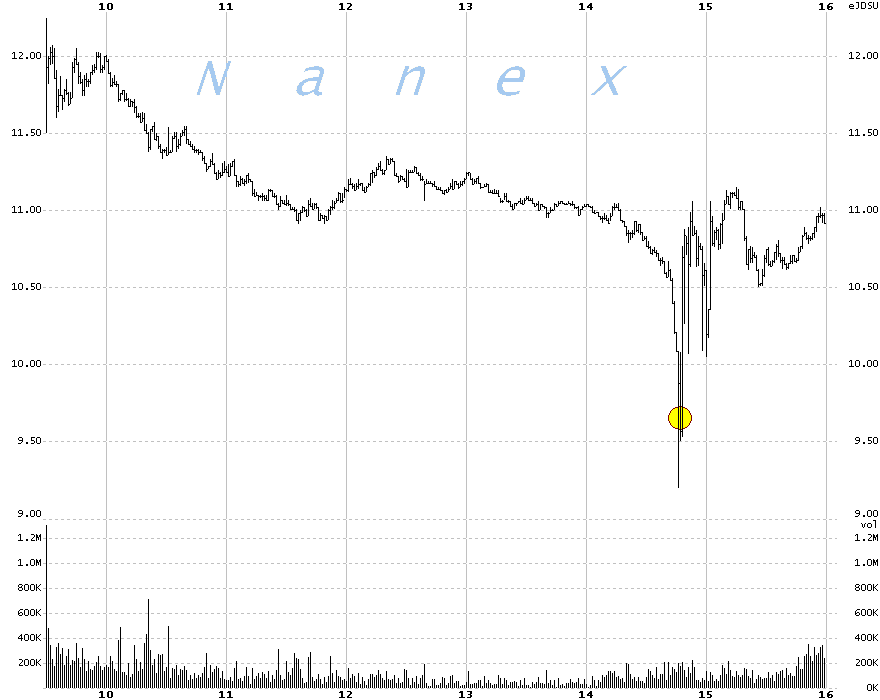
We present below, the charts of a few large capitalization, widely-held stocks
that hit their simulated trading bands using data from May 6, 2010. The circle
shows the time and price where the stock would have triggered a pause or halt
if the plan as it is written were in place on that day. All of these
trigger points occur when liquidity was near its lowest point, so it was highly
likely that trading halts of 5 minutes or more would have frozen all these
stocks at the point indicated by the circle; allowing far more investors to
experience the anxiety of the flash crash in real time.
If you are interested in viewing all 350 chart images, please send us an
email.
|
DIS - Walt Disney Company
IBM - International Business Machines
AVP - Avon Products
DOW - Dow Chemical Company
TWX - Time Warner, Inc.
MRK - Merck & Company, Inc
ABT - Abbott Laboratories
ORCL - Oracle Corp
CSCO - Cisco Systems, Inc.
VXX - iPath S&P 500 VIX Short Term Fund
GE - General Electric Company
MU - Micron Technologyy
HPQ - Hewlett-Packard Company
IYR - iShares Dow Jones U.S. Real Estate
JDSU - JDS Uniphase Corporation
|
Inquiries: pr@nanex.net
Publication Date: 08/03/2011
http://www.nanex.net
| This report and all material shown on this
website is published by Nanex, LLC and may not be reproduced, disseminated, or
distributed, in part or in whole, by any means, outside of the recipient's
organization without express written authorization from Nanex. It is a
violation of federal copyright law to reproduce all or part of this publication
or its contents by any means. This material does not constitute a solicitation
for the purchase or sale of any securities or investments. The opinions
expressed herein are based on publicly available information and are considered
reliable. However, Nanex makes NO WARRANTIES OR REPRESENTATIONS OF ANY SORT
with respect to this report. Any person using this material does so solely at
their own risk and Nanex and/or its employees shall be under no liability
whatsoever in any respect thereof. |
|
|
|

